

You’re managing 23 clients, each with their own social content calendar. Now they’re asking for email distribution too. The manual approach that got you here won’t get you there. Social media agencies hit a scaling wall when clients want consistent email distribution alongside their social content—the manual approach creates impossible bandwidth demands. Every new email client means hours of additional work per month, context switching between different brand voices, and the constant risk of quality slipping through the cracks. Automated email content distribution transforms agencies from time-constrained service providers into scalable content machines that can profitably serve 30+ clients while maintaining the personalised voice that keeps them loyal. The agencies that crack this code don’t just survive the scaling challenge—they use email automation as a competitive moat that locks out competitors and dramatically increases client lifetime value.
This guide covers the exact automation workflows successful agencies use to scale email distribution across multiple clients without losing quality or burning out their team. You’ll discover how to build systems that maintain each client’s unique voice, repurpose your existing content creation processes for email, and add $500-2000 monthly recurring revenue per client without proportional increases in workload.
Why Manual Email Distribution Breaks at Scale
The Hidden Time Drain of Manual Distribution
Each client email newsletter requires 2-3 hours of writing, formatting, and scheduling monthly—but that’s just the visible time cost. The real productivity killer lurks in the context switching between client voices and the cognitive load of maintaining consistency across multiple touchpoints.
When you’re manually crafting emails for 20+ clients, you’re not just writing—you’re constantly shifting between different brand personalities, industry knowledge, and communication styles. One moment you’re writing about SaaS growth metrics for a B2B software client in their direct, data-driven voice. The next, you’re switching to a warm, community-focused tone for a wellness coach’s newsletter about mindfulness practices.
This constant mental gear-shifting destroys deep work capacity. Research from the University of California, Irvine shows that it takes an average of 23 minutes to regain full focus after a task interruption.¹ For agencies juggling multiple client voices daily, this means spending more time in transition than in productive work.
The manual approach also creates dangerous consistency gaps. Without systematic processes, client voice profiles live in team members’ heads rather than documented systems. When your lead writer is sick or overwhelmed, email quality suffers. Clients start noticing that this month’s newsletter “doesn’t quite sound like me”—the beginning of the end for retention in a relationship built on voice authenticity.
Email automation tactics solve this by creating persistent systems that capture and maintain client voice profiles regardless of team capacity or individual availability.
The Opportunity Cost of Saying No to Email
Email distribution represents massive untapped revenue for most social media agencies. According to Litmus, email marketing generates an average ROI of $36 for every $1 spent—making it one of the highest ROI marketing channels available.² For agencies, this translates to $500-2000 monthly revenue per client for email services.
But the revenue impact goes deeper than just additional services. Agencies that successfully offer both social and email management typically see significantly higher client retention rates. Email creates additional touchpoints with client audiences, generates measurable business results, and positions the agency as a complete content solution rather than just a social media vendor.
Agencies without email capabilities increasingly lose competitive deals to full-service alternatives. When a prospect chooses between your social-only package and a competitor offering integrated social + email management, guess who wins? The agency that can own more of the client’s content ecosystem without forcing them to manage multiple vendor relationships.
The compounding effect is particularly brutal. Each lost deal to a more complete competitor doesn’t just cost immediate revenue—it eliminates the potential for years of retainer expansion and referrals. Meanwhile, agencies successfully scaling email services use the additional revenue to invest in better team members, tools, and client acquisition—widening their competitive moat each quarter.
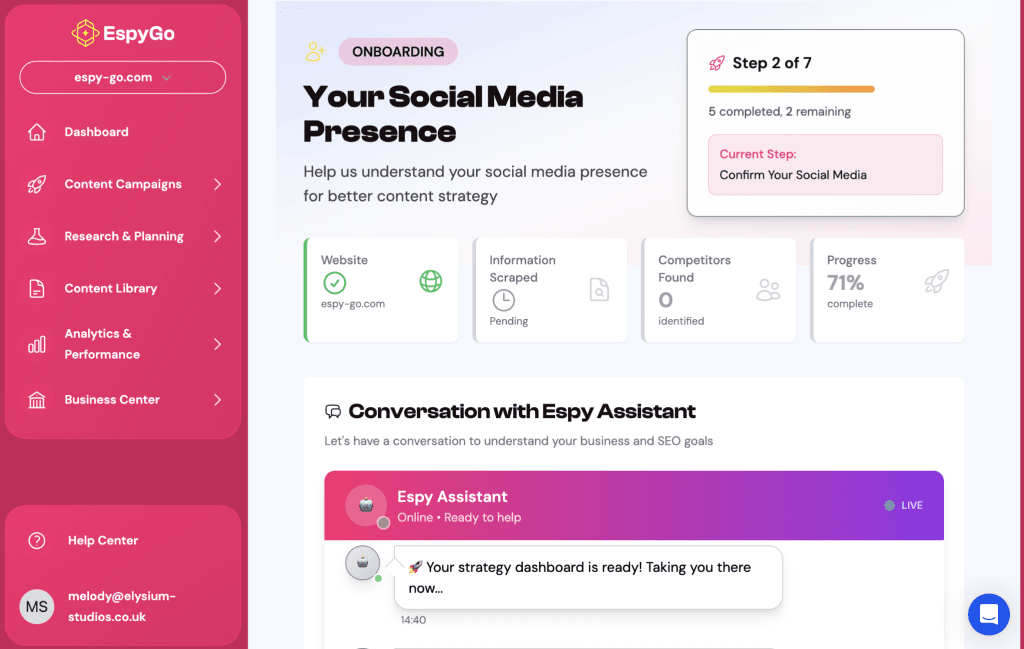
The Agency Email Automation Framework
Step 1: Build Client Voice Libraries for Email
Successful automated email content distribution starts with systematically capturing what makes each client’s communication unique. Unlike social posts that can be brief and informal, emails require sustained voice consistency across longer-form content. This means your voice profiles need more depth and specificity than basic social media guidelines.
Begin by conducting focused voice discovery sessions with each client. Ask specific questions about email preferences: “How formal should the subject lines be?” “Do you prefer data-driven arguments or story-based persuasion?” “What topics should we absolutely avoid in email?” Document these preferences alongside examples of emails the client loves and hates.
Create comprehensive email voice profiles that include:
- Tone specifications: Professional but approachable vs. casual and conversational vs. authoritative expert
- Structure preferences: Short paragraphs vs. longer explanations, bullet points vs. numbered lists
- Call-to-action styles: Direct asks vs. soft suggestions, multiple CTAs vs. single focus
- Content boundaries: Topics to emphasise, avoid, or handle with special care
- Format preferences: HTML vs. plain text, image usage, signature styles
Store these profiles in accessible systems where your entire team can reference them. The best agencies build template libraries that automatically adapt to each client’s voice specifications. When you’re creating a “new product announcement” email, the template should automatically adjust tone, structure, and CTA style based on the client’s documented preferences.
This systematic approach to content repurposing for email ensures consistency regardless of which team member handles the work and creates scalable processes that improve rather than degrade as you add clients.
Step 2: Set Up Content-to-Email Workflows
The key to scaling email distribution is building automated bridges between your existing content creation processes and email campaign development. Instead of creating email content from scratch, develop workflows that transform your social content research and client interviews into multiple email assets.
Map your typical client content themes to specific email campaign types. If you regularly create social content about industry trends, client success stories, and thought leadership, design corresponding email sequences: monthly industry roundups, quarterly case study features, and weekly insight newsletters. This mapping ensures that research and interviews you’re already conducting for social media fuel multiple content streams.
Create trigger-based email sequences that automatically launch based on subscriber behaviors or calendar events. When someone downloads a client’s lead magnet, they should automatically enter a 7-email nurture sequence. When it’s the anniversary of a major company milestone, an automated story sequence should begin. These small business email workflows reduce manual campaign planning while providing consistent touchpoints.
Develop content repurposing systems that turn high-performing social posts into email content. Your most engaged LinkedIn posts contain proven messaging that audiences respond to—these should automatically become email subjects, stories, or calls-to-action. Build processes where top-performing content from one channel systematically informs content for others.
The most efficient agencies create monthly content sprints where one intensive interview or research session feeds both social calendars and email sequences. Spend 90 minutes with a client discussing industry challenges, then use that conversation to fuel 4 weeks of social posts AND a 6-email thought leadership sequence. This approach maximises the value of every client interaction.
Step 3: Implement Cross-Client Automation Systems
Once you have individual client systems working, the real scalability comes from creating automation frameworks that work across your entire client roster while preserving individual voice and brand requirements.
Design campaign templates that adapt to different client voices while maintaining consistent structural quality. A “quarterly business update” template should work for both a SaaS startup and a consulting firm, but automatically adjust tone, metrics focus, and call-to-action style based on each client’s voice profile. This lets you create proven campaign frameworks once, then deploy them across multiple clients with confidence.
Set up automated scheduling systems that account for optimal send times across different industries and client preferences. B2B software clients might perform best with Tuesday morning sends, while e-commerce clients see better engagement on weekend afternoons. Your automation should handle these variations without manual intervention.
Create review and approval workflows that scale across your growing client roster. Automated systems should generate draft campaigns, route them to appropriate team members for client-specific reviews, and handle approval processes without bottlenecking on any single person. The best agencies use staged automation where initial drafts are system-generated, junior team members handle first-pass reviews, and senior staff only touch campaigns that need strategic input.
Implement cross-client reporting dashboards that let you spot performance patterns and optimisation opportunities across your entire portfolio. When you notice that “behind-the-scenes” content performs exceptionally well for multiple clients, you can systematically test similar approaches across your roster.
Advanced Tactics for Agency Email Automation
Behavioural Segmentation Across Client Bases
Advanced email automation tactics go beyond basic demographic segmentation to behavior-based audience management that works across multiple client industries. Set up automated segmentation systems that identify subscriber engagement patterns and adjust messaging accordingly, regardless of the specific client industry.
Create engagement-based segments that automatically categorise subscribers as highly engaged, moderately engaged, or disengaged based on email opens, clicks, and website behavior. These segments should trigger different messaging strategies: highly engaged subscribers get insider content and exclusive offers, moderate engagement gets educational content with soft CTAs, and disengaged subscribers enter re-engagement campaigns.
Develop industry-agnostic behavioral triggers that work across your client base. Someone who clicks on pricing information across three emails shows purchase intent, whether they’re interested in consulting services or software subscriptions. Build automated sequences that recognise these intent signals and adjust messaging intensity accordingly.
Use cross-client performance data to optimise send timing and content types automatically. If “story-driven” content consistently outperforms “data-driven” content across multiple clients in the first quarter, your automation should gradually increase story content ratios across similar client segments. This creates compound optimisation effects where insights from one client improve results across your entire portfolio.
Implement A/B testing frameworks that run across multiple clients simultaneously. Test subject line approaches, content structures, or CTA styles across different client bases to identify patterns that transcend individual brand preferences. This systematic approach to optimisation scales learning effects and improvement rates.
Content Repurposing Automation
The most sophisticated agencies build systems that automatically convert high-performing content across multiple formats and time horizons. Your best social media content shouldn’t just live on social platforms—it should systematically feed email campaigns, blog content, and evergreen automation sequences.
Set up automated systems that identify top-performing social posts based on engagement metrics and automatically queue them for email repurposing. When a LinkedIn post generates exceptional engagement, it should trigger an automated workflow that adapts the core message for email format, adjusts it to the client’s email voice profile, and schedules it into the appropriate email sequence.
Create evergreen drip campaigns using each client’s best historical content. Instead of constantly creating new material, identify your client’s 20-30 highest-impact pieces of content and build automated sequences that reintroduce this material to new subscribers over 6-12 months. This approach maximises the value of content you’ve already created while providing consistent value to growing email lists.
Build systems for turning client interviews and strategy sessions into multiple automated email sequences. A 60-minute conversation about industry challenges can become a 5-part email series about common problems, a 3-email case study sequence, and material for monthly newsletter sections. Systematic repurposing multiplies the ROI of every client interaction.
Develop seasonal and evergreen content libraries that work across multiple clients with voice customisation. Holiday marketing strategies, year-end planning content, and industry trend discussions can be template-based but personalised through your voice profiling systems. This allows you to create sophisticated content calendars without starting from scratch for each client.
Implementation Timeline and Next Steps
Month 1: Foundation Building
Start by selecting your three highest-value clients for email automation pilot programs. Focus on clients with established social media success and clear audience engagement patterns. Build comprehensive voice profiles for these clients and create your first automated email sequence templates.
Set up the technical infrastructure: choose an email platform that integrates with your existing tools, establish automated workflows, and create approval processes that can scale. Document everything you build during this phase—these systems will become templates for future client onboarding.
Month 2-3: Expansion and Optimisation
Roll out email automation to 5-10 additional clients using the refined systems from your pilot program. Start identifying cross-client optimisation opportunities and begin building your library of proven campaign templates.
Focus on measuring results and refining your processes. Track time savings, client satisfaction, and revenue impact from your automation systems. Use this data to justify the initial setup investment and guide further system improvements.
Month 4+: Scale and Sophistication
Begin implementing advanced behavioral segmentation and cross-client optimisation strategies. Your systems should now be sophisticated enough to handle 20+ clients with minimal manual intervention.
Start positioning email automation as a competitive differentiator in new business pitches. The efficiency gains and client results you’ve achieved become powerful sales tools for acquiring larger, higher-value accounts.
The EspyGo Advantage: Scale Email Distribution With AI-Powered Content Intelligence
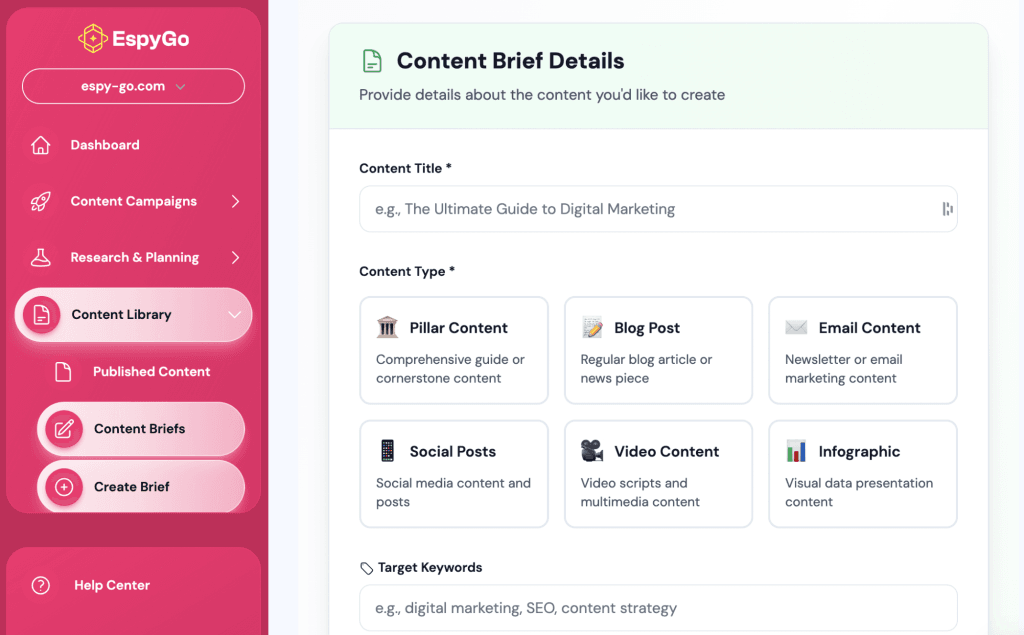
Most agencies struggle with email because they’re flying blind—guessing which topics resonate, which formats drive opens, and which messages AI systems associate with their clients’ brands. EspyGo eliminates that guesswork. It shows you exactly how your clients’ content is being interpreted, categorised, and surfaced across AI-driven platforms like ChatGPT, Claude, Perplexity, and Google AI Overviews.
With EspyGo, you can instantly see which email themes have the strongest AI authority signals, which topics your clients should double-down on, and which content their audience segments are most likely to engage with. This turns your email automation workflows into data-driven performance engines instead of educated guesses.
For agencies scaling email across 20–40+ clients, EspyGo becomes the strategic layer that keeps voice, relevance, and authority consistent—while dramatically improving open rates, click-throughs, and content alignment.
Conclusion
Automated email content distribution transforms agencies from time-constrained service providers into scalable content machines that can profitably serve 30+ clients while maintaining the personalised voice quality that drives retention. The agencies implementing these systems aren’t just solving capacity problems—they’re building competitive advantages that compound over time.
Start with one client and one automated campaign type—perhaps a monthly newsletter sequence or a lead magnet follow-up series. Build the voice profiling, content repurposing, and automation workflows until they run smoothly. Then systematically scale these frameworks across your client roster, using the additional revenue to invest in better team members and more sophisticated automation tools.
The agencies that master these systems don’t just survive the transition from 20 to 30+ clients—they dominate their markets by offering comprehensive content solutions that single-channel competitors cannot match. Your email automation infrastructure becomes a moat that protects and grows your business while delivering exceptional results for every client.
Upgrade your agency’s email automation workflows.
Try EspyGo free and pinpoint the brand signals that actually move the needle.
References:
¹ Mark, G., Gudith, D., & Klocke, U. (2008). The cost of interrupted work: More speed and stress. University of California, Irvine. CHI ’08: Proceedings of the SIGCHI Conference on Human Factors in Computing Systems.
² Litmus. (2023). State of Email Report 2023. Available at: https://www.litmus.com/resources/state-of-email/