


Most SaaS companies treat content like a slot machine—randomly pulling the lever hoping for leads. But the fastest-growing SaaS companies treat content like a manufacturing line: systematic, predictable, and scalable. Without a structured content engine, SaaS teams waste time on one-off posts that don’t compound, struggle with inconsistent messaging, and can’t scale their content efforts as they grow. Your brilliant product insights get buried in sporadic LinkedIn posts. Your customer success stories never make it beyond a single blog article. Your team burns out creating content that generates fleeting engagement instead of sustained growth.
A content engine transforms chaotic content creation into a systematic approach that generates consistent results with less effort. Instead of reactive posting, you build predictable workflows. Instead of scattered messaging, you create cohesive customer journeys. Instead of content that disappears, you build assets that compound over time.
The difference between SaaS companies that scale through content and those that struggle isn’t talent or budget—it’s systems. We’ll cover the 5 essential systems every SaaS content engine needs, plus how tools like Espy-Go help teams execute consistently without hiring entire marketing departments.
Why Most SaaS Content Strategies Fail (And What Works Instead)
The Random Content Problem
Walk into most SaaS companies and you’ll find a familiar scene: someone scrambling to create this week’s blog post, another person posting sporadically on LinkedIn, and a founder wondering why their “content marketing” isn’t driving leads. This ad-hoc approach to content creation is killing SaaS growth potential.
The symptoms are everywhere:
- Content topics chosen based on what feels interesting rather than strategic objectives
- Inconsistent posting schedules that confuse your audience about when to expect value
- Brand voice that shifts depending on who’s writing that week
- Zero content repurposing, meaning each piece requires full effort for limited reach
- No clear connection between content topics and customer journey stages
According to HubSpot’s State of Marketing report, companies with documented content strategies are 60% more likely to achieve their marketing goals than those without. Yet most SaaS teams treat content as an afterthought—something to squeeze in between product updates and customer calls.
This scattered approach creates three critical problems:
- Firstly, your content doesn’t compound. Each blog post, social update, or video exists in isolation. You’re not building on previous topics or creating content series that deepen relationships with prospects.
- Secondly, your messaging confuses potential customers. Without consistent themes and voice, prospects can’t figure out what you stand for or why they should choose you.
- Thirdly, your team burns out from constantly starting from scratch instead of leveraging templates, frameworks, and repeatable processes.
Successful SaaS companies like Notion, Slack, and HubSpot don’t randomly post content. They follow documented strategies with clear content pillars, systematic production workflows, and built-in distribution channels.
What Makes a Content Engine Different
A content engine framework isn’t just organised content creation—it’s a systematic approach that treats content as a predictable business function. Think of it like your product development process: you don’t randomly build features hoping they’ll work. You research user needs, plan development cycles, and test systematically.
The core principles that separate content engines from content chaos:
- Systematic approach with repeatable processes. Every content piece follows documented briefs, approval workflows, and quality checkpoints. Your team knows exactly how long each content type takes to produce and what resources are required. This predictability lets you plan capacity and hit deadlines consistently.
- Content pillars aligned with customer journey stages. Instead of random topics, every piece of content serves a specific purpose in moving prospects from awareness to trial to customer. Your educational content attracts early-stage prospects. Your comparison content helps evaluation-stage buyers. Your customer success content converts late-stage prospects.
- Built-in distribution and repurposing workflows. Each core content piece automatically generates 5-10 derivative assets across different channels. A comprehensive blog post becomes Twitter threads, LinkedIn carousels, email newsletter content, and podcast talking points. This multiplication effect maximises your content investment.
Companies with effective saas content marketing strategy systems report significantly higher engagement and lead generation rates compared to companies using ad-hoc approaches. The difference isn’t working harder—it’s working systematically.
The 5 Systems Every SaaS Content Engine Needs
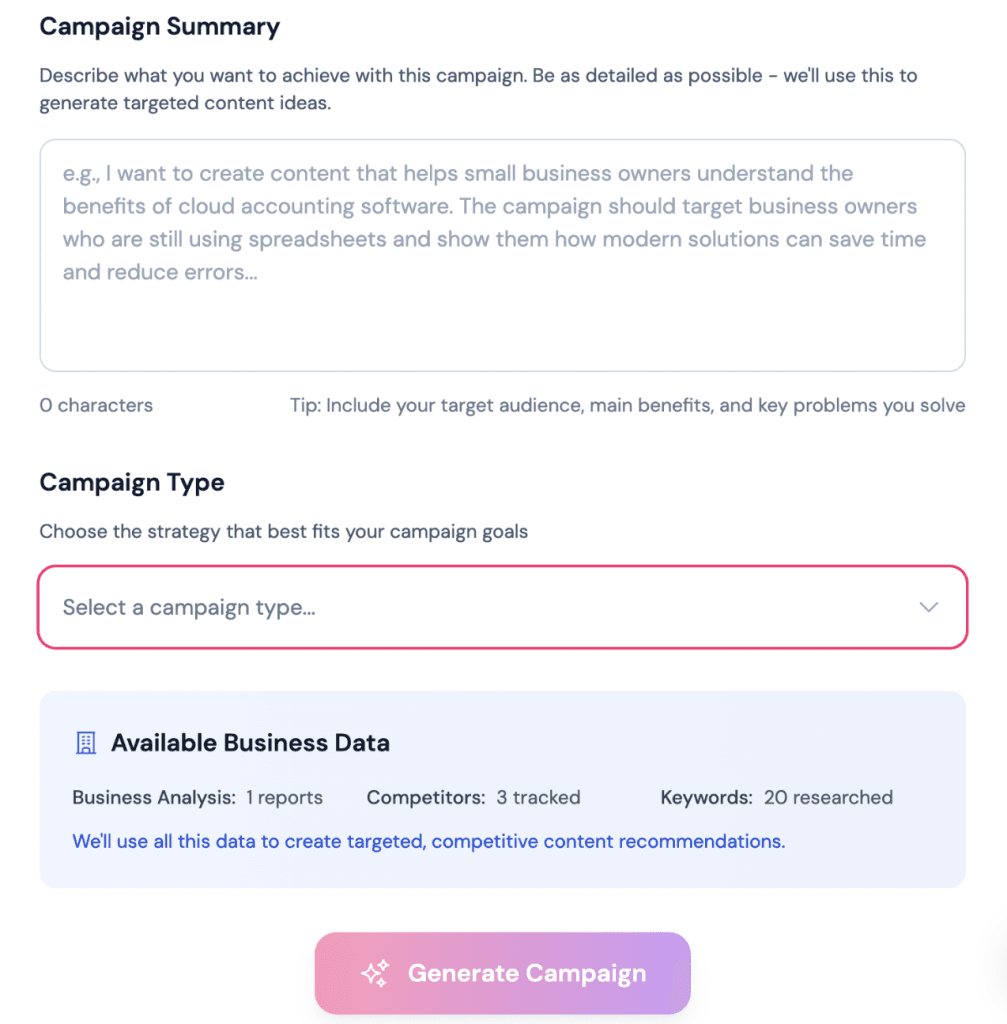
Building a content engine requires five interconnected systems that transform chaotic creation into predictable growth. Each system addresses a specific operational challenge that SaaS teams face when scaling content production.
System 1: Content Pillar Framework
Your content pillar framework maps content themes to specific customer journey stages, ensuring every piece serves a strategic purpose. Most SaaS companies skip this foundation and wonder why their content doesn’t drive qualified leads.
Start with 3-5 core pillars that showcase your expertise:
- Educational pillar addresses problems your ideal customers face before they realise they need your solution. For project management SaaS, this might be “Team productivity challenges” with topics like async communication best practices or remote team management frameworks. This content attracts early-stage prospects who aren’t yet shopping for tools.
- Industry insights pillar positions your team as thought leaders who understand market trends and challenges. Share data from your customer base, industry predictions, and analysis of competitive dynamics. This builds credibility with prospects evaluating multiple solutions.
- Customer success pillar showcases real results your customers achieve, addressing late-stage buying concerns about ROI and implementation success. Feature detailed case studies, customer spotlights, and quantified outcome stories.
- Product education pillar helps prospects understand how your solution solves their specific challenges without being overly promotional. Focus on workflows, use cases, and strategic approaches rather than feature lists.
- Behind-the-scenes pillar humanises your brand and builds emotional connections with prospects who want to work with companies they trust. Share team stories, company culture insights, and founder perspectives.
Notion excels at this framework: their educational content teaches productivity systems, their product content demonstrates workflow solutions, and their customer stories prove results across different use cases. Each pillar reinforces their positioning whilst serving different prospect needs.
Map each pillar to specific customer journey stages and track performance metrics for each. This data shows which pillars drive the most qualified leads and deserve additional investment.
System 2: Production Workflow
Consistent content production requires standardised workflows that eliminate decision fatigue and ensure quality control. Without documented processes, each content piece becomes a custom project that drains resources and delays publication.
Build your production workflow around these components:
- Standardised content briefs eliminate the blank page problem and ensure strategic alignment. Every brief includes target audience, content objective, key messages, SEO requirements, and success metrics. Templates save planning time and improve content quality by forcing strategic thinking upfront.
- Clear approval processes and deadlines prevent bottlenecks and missed publication dates. Define who approves different content types, how long each approval stage takes, and what happens if deadlines are missed. Many SaaS teams underestimate approval time and consistently publish late.
- Quality control checkpoints maintain brand consistency and content standards. Check for brand voice alignment, factual accuracy, SEO optimisation, and call-to-action effectiveness. Use checklists to ensure nothing falls through cracks.
Buffer’s content team publishes 50+ pieces monthly using documented workflows with 48-hour approval cycles and built-in quality reviews. Their systematic approach maintains consistent quality whilst scaling production capacity.
Track workflow metrics like average production time, approval delays, and revision cycles. This data helps optimise processes and identify bottlenecks before they impact publication schedules.
System 3: Multi-Channel Distribution
Creating great content is only half the challenge—systematic distribution multiplies your content investment by reaching audiences across multiple touchpoints. Most saas content system efforts fail because teams focus entirely on creation and treat distribution as an afterthought.
Structure your distribution around these principles:
- Primary publication on owned channels gives you complete control over presentation and captures direct audience engagement. Your blog, email newsletter, and podcast serve as content hubs where prospects can consume multiple pieces and take conversion actions.
- Systematic repurposing for different platforms adapts your core content for platform-specific audiences and formats. A 2,000-word blog post becomes a Twitter thread highlighting key insights, a LinkedIn carousel with visual summaries, a YouTube video walkthrough, and email newsletter sections. Each format serves different consumption preferences whilst reinforcing key messages.
- Cross-channel promotion calendar ensures coordinated content amplification across all channels. Schedule social media posts that drive traffic to blog content, email campaigns that promote new resources, and podcast episodes that reference recent articles.
Ahrefs demonstrates effective multi-channel distribution: their comprehensive SEO guides appear first on their blog, then get adapted into Twitter threads, YouTube tutorials, LinkedIn posts, and email course sequences. Each channel reinforces their expertise whilst reaching different audience segments.
Plan distribution before content creation, not after. Include distribution requirements in your content briefs and allocate time for repurposing in your production workflows.
System 4: Performance Optimisation
Without systematic performance tracking, you can’t identify which content drives results or improve your content engine over time. Most SaaS teams measure vanity metrics like page views instead of business outcomes like qualified leads and customer acquisition.
Build performance optimisation around these metrics:
- Lead generation effectiveness tracks which content pieces generate the most qualified prospects. Monitor not just lead volume but lead quality—which content attracts prospects who convert to customers. This data reveals your most valuable content themes and formats.
- Customer journey progression measures how effectively content moves prospects through your funnel. Track content engagement patterns for prospects who become customers versus those who don’t. This analysis shows which content combinations drive conversions.
- Content ROI analysis calculates the true cost and return of your content investments. Factor in production time, promotion spend, and opportunity costs. Compare content performance to other marketing channels to optimise budget allocation.
HubSpot tracks detailed content analytics showing which blog posts generate the most trial signups, which email sequences drive the highest engagement, and which social content formats perform best for different customer segments. This granular data drives their content strategy decisions.
Establish monthly content performance reviews that examine both engagement metrics and business outcomes. Use this data to double down on high-performing content approaches and eliminate low-impact activities.
System 5: Team Coordination
Scaling content production requires clear roles, communication protocols, and collaboration workflows. Without systematic team coordination, content quality suffers and production bottlenecks emerge as teams grow.
Establish coordination through these structures:
- Defined content roles and responsibilities eliminate confusion about who handles each aspect of content creation. Assign clear ownership for content strategy, brief creation, writing, editing, design, distribution, and performance analysis. This accountability prevents important tasks from falling through gaps.
- Regular content planning and review cycles keep teams aligned on priorities and progress. Weekly production meetings ensure deadlines stay on track. Monthly strategy reviews adjust content direction based on performance data and business objectives.
- Collaboration tools and communication protocols streamline content coordination without overwhelming team members with meetings. Use shared calendars for content schedules, collaborative documents for brief development, and structured feedback processes for content reviews.
Slack’s content team coordinates across multiple time zones using documented processes, shared project management systems, and regular asynchronous check-ins. Their systematic approach maintains content quality and production velocity despite distributed team challenges.
Create content team playbooks that document all processes, roles, and standards. This documentation enables consistent execution as team members change and helps new hires contribute quickly.
How Espy-Go Helps SaaS Teams Build Scalable Content Engines
Building and maintaining a content engine framework requires coordination across multiple systems, stakeholders, and channels. Most SaaS teams struggle with this operational complexity, leading to inconsistent execution and wasted effort. Espy-Go addresses these challenges by providing the operational backbone for efficient content operations.
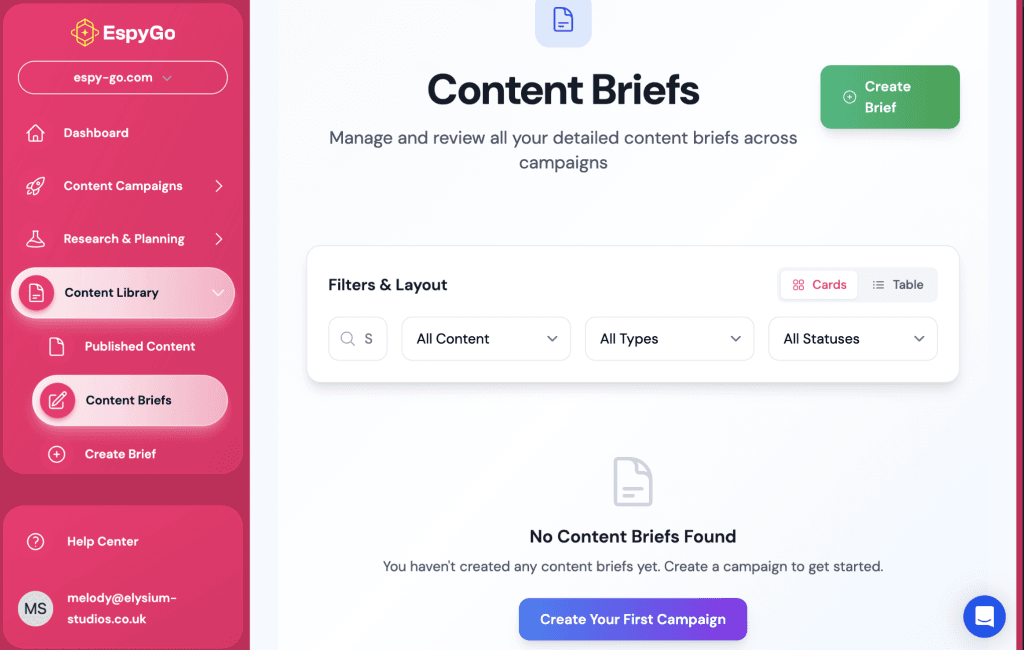
Streamlined Brief Creation and Workflow Management
Content planning and production bottlenecks kill momentum for lean SaaS marketing teams. You know you need strategic content briefs, but creating them from scratch takes time you don’t have. You understand approval workflows matter, but managing them through email and Slack creates confusion and delays.
Espy-Go solves these operational challenges with built-in automation:
- Automated brief generation eliminates the blank page problem by creating strategic content outlines based on your content pillars and target audience needs. Instead of spending hours researching topics and structuring briefs, you get strategic frameworks that include SEO keywords, audience insights, and competitive positioning. This saves 60-80% of content planning time whilst ensuring strategic alignment.
- Built-in approval workflows prevent bottlenecks by automatically routing content through predefined review stages with deadline reminders and escalation protocols. Stakeholders receive notifications when their review is needed, can provide feedback directly within the platform, and automatically advance content to the next stage upon approval. This systematic approach eliminates email chaos and ensures consistent turnaround times.
- Template library ensures consistency across all content types with predefined formats for blog posts, social media campaigns, email sequences, and video scripts. Your team accesses proven frameworks instead of reinventing content structures, maintaining brand voice and strategic messaging whilst reducing production time.
These workflow automation features let small SaaS teams execute like larger marketing departments without the overhead or coordination complexity.
Campaign Distribution and Brand Consistency
Maintaining consistent messaging across multiple channels whilst scaling content production challenges even experienced marketing teams. Your brand voice shifts depending on who’s writing. Your visual design varies by platform. Your campaign messaging lacks coordination across touchpoints.
Espy-Go addresses these consistency challenges through systematic campaign management:
- Structured campaign distribution coordinates content publication across all channels with unified messaging themes and visual consistency. Create campaign frameworks that automatically generate channel-specific content variations whilst maintaining core message alignment. Your blog post, social media assets, email campaigns, and video content reinforce the same strategic positioning.
- Brand guidelines enforcement in all content ensures voice, tone, and visual consistency regardless of who’s creating content or which platforms you’re using. Built-in style guides, approved messaging frameworks, and visual asset libraries prevent brand drift as your content production scales.
- Performance tracking across touchpoints provides comprehensive campaign analytics that show which content pieces drive the most engagement, leads, and conversions across all channels. Instead of managing separate analytics for blog, social, email, and video content, you get unified reporting that reveals your most effective content approaches.
This systematic approach to content campaign management and brand consistency lets SaaS teams maintain professional presentation standards whilst scaling content production efficiently.
Conclusion
Building a saas content marketing strategy engine transforms SaaS marketing from reactive scrambling to systematic growth. Instead of hoping random content pieces generate leads, you create predictable workflows that consistently attract, educate, and convert prospects. The five systems—content pillar framework, production workflow, multi-channel distribution, performance optimisation, and team coordination—work together to eliminate content chaos whilst maximising your marketing investment.
The difference between SaaS companies that scale through content and those that struggle isn’t budget or team size—it’s systematic execution. Companies with documented content engines generate significantly more qualified leads per content piece and maintain consistent growth trajectories regardless of market conditions.
Start by defining your 3 core content pillars aligned with customer journey stages, then implement one system at a time. Focus on content consistency over content volume initially, and gradually scale production capacity as your workflows mature. Consider Espy-Go to automate workflow management and maintain brand consistency as your content operations grow.
Your SaaS deserves better than content slot machine tactics. Build the engine, trust the system, and watch systematic content creation drive predictable growth.
Still publishing by guesswork?
😎 Let’s fix that.
Build a repeatable content engine that runs even when you’re not watching. → Book a demo now.