


If you’re spending 3-4 hours briefing content for each SaaS client every week, you’re trapped in the manual briefing cycle that’s killing your agency’s growth potential. Small SaaS agencies waste 60-70% of their content production time on repetitive briefing, project coordination, and miscommunication cycles instead of creating high-impact content that drives client results. This endless loop of individual briefing sessions, revision rounds, and context switching between clients creates bottlenecks that prevent agencies from scaling beyond 10-15 clients without burning out their teams. The Brief Once strategy eliminates this waste by creating one comprehensive master brief that automatically generates all campaign assets, cutting briefing time by 75% while improving content consistency across your entire client portfolio. Instead of creating separate briefs for blog posts, social media, email campaigns, and landing pages, you develop a single strategic document that powers multiple content formats simultaneously.
You’ll discover the exact Brief Once framework that transforms traditional briefing workflows, see how leading SaaS agencies adapt single briefs into multi-channel campaigns, and learn implementation steps that work specifically for agencies managing multiple SaaS clients without expanding headcount or sacrificing quality standards.
The Hidden Cost of Traditional Briefing: Why SaaS Agencies Stay Stuck
The Briefing Time Trap: Where Your Hours Really Go
The average SaaS agency spends 12-15 hours per client per month just on briefing and coordination activities that don’t directly create content or drive results. This hidden time drain occurs because traditional content briefing processes require multiple touchpoints for every single piece of content across your client portfolio.
Each blog post, social media campaign, or email sequence demands 2-3 briefing rounds due to miscommunication and scope creep. Your content manager starts with an initial brief, which triggers questions from the writing team, leading to clarification calls with the client, followed by revised briefs that often miss key messaging elements discovered during the creation process.
Your team members switch between different client contexts 8-12 times daily, losing focus and momentum with every transition. Sarah, your content lead, might jump from briefing a cybersecurity SaaS client’s thought leadership piece to coordinating an e-commerce platform’s product launch content, then back to revising social media guidelines for a project management tool. Each context switch requires 10-15 minutes to fully reorient, multiplying the actual time spent on briefing activities.
This fragmented content briefing process creates quality inconsistencies across clients. When your team operates in reactive briefing mode, they miss opportunities to align content with broader campaign objectives or leverage successful messaging patterns from other clients. The result is content that technically meets brief requirements but fails to maximize impact or create synergies across your agency’s portfolio.
The Quality vs Speed Dilemma
Rushed briefs lead to content that misses client objectives and requires extensive revisions, creating a vicious cycle that actually increases total production time. When deadline pressure mounts, your team creates surface-level briefs that cover basic requirements but miss strategic nuances like competitive positioning, buyer journey stage, or integration with other marketing initiatives.
Detailed individual briefing doesn’t scale when managing 5-20 SaaS clients simultaneously. The comprehensive briefing approach that works for 3-5 clients becomes impossible to maintain as your portfolio grows. You face an impossible choice: sacrifice briefing quality to meet deadlines, or maintain standards while missing delivery commitments and disappointing clients.
Inconsistent briefing quality creates unpredictable content results across your client portfolio. Some clients receive thoroughly researched, strategically aligned content while others get generic pieces that fail to differentiate their brand or drive meaningful engagement. This inconsistency damages your agency’s reputation and makes it difficult to command premium pricing or secure long-term retainers.
The traditional briefing model also fails to capture institutional knowledge about what works for specific SaaS verticals. When each brief is created independently, your team can’t systematically apply lessons learned from successful campaigns to new projects. A breakthrough messaging approach that drives exceptional results for one fintech client never gets adapted for similar clients because there’s no systematic way to capture and reuse strategic insights.
This quality versus speed dilemma forces many agencies to choose between sustainable growth and client satisfaction, leading to team burnout, client churn, or both. The Brief Once strategy eliminates this false choice by creating a systematic approach that delivers both efficiency and quality at scale.
Brief Once Strategy: The Complete Framework for SaaS Agencies
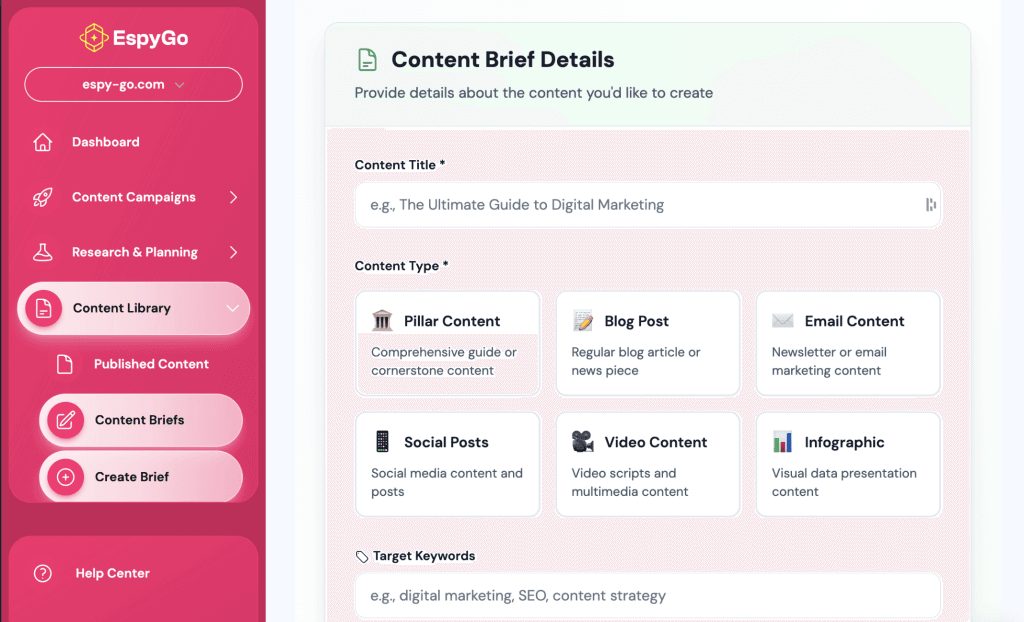
Stage 1: Master Brief Creation – The Strategic Foundation
The Brief Once strategy begins with developing a comprehensive client strategy document that serves as the foundation for all content creation activities. This master brief template goes far beyond traditional project briefs by capturing buyer personas, key messaging frameworks, competitive positioning, brand voice guidelines, and success metrics in a single, modular document.
Your master brief includes detailed buyer persona profiles with specific pain points, goals, and preferred content formats for each stage of the customer journey. Instead of repeatedly researching and documenting these insights for individual pieces, you create comprehensive personas once and reference them for every content asset. For a project management SaaS client, this might include detailed profiles for IT directors, operations managers, and team leads, complete with their specific challenges, decision-making criteria, and content consumption preferences.
Campaign goals, brand voice, competitive positioning, and success metrics are documented with specific guidelines that eliminate guesswork during content creation. Your master brief specifies exactly how the client differentiates from competitors, what tone and messaging style to maintain, and which metrics define success for different content types. This strategic foundation prevents content from drifting off-brand or missing key positioning elements that drive results.
The modular structure enables your team to reference specific brief sections for any content format or channel without recreating strategic context. Blog post briefs pull from the thought leadership messaging module, social media campaigns reference the brand voice section, and email sequences utilize the buyer journey mapping. This campaign planning system ensures consistency while dramatically reducing brief creation time.
Master briefs also capture content themes, messaging pillars, and approved examples that provide creative direction without micromanagement. Your team understands not just what to create, but why certain approaches align with client objectives and how different pieces connect to broader campaign goals.
Stage 2: Asset Adaptation Framework – One Brief, Multiple Outputs
The asset adaptation framework transforms your master brief into specific content requirements for blogs, social posts, email sequences, and landing pages without recreating strategic context for each piece. Standardized adaptation templates maintain consistency while optimizing content for each channel’s unique requirements and audience behaviors.
Your content production workflow uses templated approaches that specify how master brief elements adapt to different formats. Blog posts pull strategic messaging and persona insights while adding SEO requirements and thought leadership angles. Social media campaigns reference brand voice and key messages while incorporating platform-specific best practices and engagement tactics.
This content cascading system enables one strategic brief to power 8-12 different content assets simultaneously. A comprehensive product launch master brief might generate blog posts about industry challenges, LinkedIn thought leadership content, email nurture sequences, landing page copy, and social media campaigns—all maintaining consistent messaging while optimizing for each format’s unique requirements.
The adaptation process includes specific templates for content briefs, creative briefs, and distribution plans that reference master brief sections without duplicating information. Your blog content brief might be two paragraphs that reference specific personas, messaging pillars, and competitive positioning from the master brief, plus format-specific requirements like target keywords and content structure.
Quality control mechanisms ensure that adapted content maintains strategic alignment while meeting channel-specific objectives. Regular audits compare finished content against master brief objectives to identify adaptation patterns that consistently drive results and refine templates accordingly.
Stage 3: Team Implementation and Quality Control
Successful Brief Once implementation requires systematic team training using standardized checklists and templates that eliminate interpretation variance across team members. Your content creators, designers, and project managers all understand how to work from master briefs using consistent processes that maintain quality without micromanagement.
Team collaboration software integrates master briefs into your project management workflow, ensuring every team member accesses current strategic context without hunting through email chains or shared drives. Content creators reference master briefs directly within their project management tools, eliminating the context switching that fragments traditional briefing approaches.
Standardized quality gates ensure consistency across all content pieces without individual micro-management of each asset. Your quality checklist references master brief elements like brand voice compliance, persona alignment, and strategic messaging integration. Team members can self-assess content quality using objective criteria tied to master brief specifications.
Feedback loops continuously improve master brief quality over time based on content performance data and client results. Monthly reviews analyze which master brief elements consistently drive successful content and which areas need refinement. This systematic optimization ensures your Brief Once strategy becomes more effective as you implement it across more clients.
Documentation templates capture lessons learned and successful adaptation patterns that can be applied to similar clients or campaigns. When a particular messaging approach drives exceptional results, it’s documented and integrated into relevant master brief templates for future use.
Making Brief Once Work: Implementation Guide for SaaS Agencies
Quick Start: Your First Brief Once Implementation
Choose one high-volume client to pilot the Brief Once strategy and create your first master brief template that you can refine and replicate across your portfolio. Select a client with consistent content needs and good communication patterns who will provide honest feedback during the initial implementation phase.
Document your current briefing process to identify the biggest time wasters and communication gaps that the Brief Once approach should eliminate. Track how long current briefing activities take, how many revision rounds each content piece requires, and where miscommunication typically occurs. This baseline measurement will help you demonstrate ROI as you implement the new system.
Set up an approval workflow that gets client sign-off on the master brief before any content creation begins. This front-loaded approval process prevents scope creep and revision cycles that traditionally occur during individual content briefing. Your client approves strategic direction, messaging frameworks, and creative guidelines once, then trusts your team to execute consistently across all content formats.
Your 30-day implementation timeline should include:
- Days 1-7: Document current briefing process and select pilot client
- Days 8-14: Create master brief template and get client approval
- Days 15-21: Adapt first master brief for 3-4 different content pieces
- Days 22-30: Measure time savings and content quality improvements
Success metrics include briefing time reduction, content approval speed, and team satisfaction with the new workflow. Track these metrics consistently to build confidence in the Brief Once approach before rolling it out to additional clients.
Common Implementation Mistakes That Kill Results
Making master briefs too complex or detailed creates new bottlenecks instead of solving existing ones. Some agencies attempt to document every possible content scenario in their master brief, resulting in documents that are difficult to navigate and reference during actual content creation. Keep master briefs comprehensive but focused on essential strategic elements that genuinely impact content quality and consistency.
Skipping the team training phase leads to inconsistent brief interpretation and execution that undermines the entire marketing workflow automation objective. Team members need specific training on how to reference master brief sections, adapt strategic elements for different formats, and maintain quality standards without individual oversight. This training investment pays dividends in reduced supervision time and improved content consistency.
Not establishing clear revision protocols allows scope creep to undermine the streamlined process that makes Brief Once effective. Clients must understand that master brief approval covers strategic direction and messaging, while individual content pieces will be executed according to approved templates and guidelines. Post-master brief revisions should focus on execution quality rather than strategic changes that affect multiple content pieces.
Another critical mistake is implementing Brief Once across all clients simultaneously rather than piloting with selected accounts. This approach overwhelms your team and makes it difficult to refine templates and processes based on real-world feedback. Start with 2-3 pilot clients, perfect your approach, then systematically expand implementation across your portfolio.
Finally, agencies often fail to measure and communicate time savings achieved through Brief Once implementation. Without concrete metrics demonstrating efficiency gains, team members may resist the new process or clients may not appreciate the value of improved workflow systems. Document and share time savings, quality improvements, and team satisfaction metrics to build buy-in and justify the implementation investment.
Scaling Brief Once Across Your Entire Portfolio
Once you’ve successfully implemented Brief Once with your pilot client, systematic rollout across your portfolio requires strategic prioritization and resource allocation. Focus first on clients with similar content volumes and requirements to maximize template reusability and minimize adaptation time.
Create client-specific master brief variations that maintain your core framework while accommodating unique industry requirements, compliance standards, or brand guidelines. A healthcare SaaS client might need additional regulatory compliance sections, while a fintech client requires specific security messaging elements. These variations build on your proven foundation rather than starting from scratch.
Establish a rotating schedule for master brief updates that keeps strategic context current without overwhelming your team. Quarterly reviews ensure master briefs reflect evolving client objectives, market conditions, and performance insights. This systematic maintenance prevents master briefs from becoming outdated documents that no longer serve their efficiency purpose.
Train your account management team to identify opportunities where Brief Once implementation would deliver maximum impact. Clients experiencing frequent revision cycles, inconsistent content quality, or extended approval processes are ideal candidates for master brief conversion. Account managers can position Brief Once as a solution to these specific pain points rather than a general process improvement.
The EspyGo Edge: Scale Your Brief Once System With AI-Driven Consistency

Once your agency adopts the Brief Once method, the next bottleneck isn’t briefing — it’s keeping every piece of content strategically aligned as clients scale, campaigns expand, and priorities shift. That’s where EspyGo becomes your operational advantage.
AI-Powered Brief Consistency: EspyGo analyses your client messaging, personas, and positioning to spot inconsistencies across blogs, social content, and email sequences — ensuring everything produced from your master brief stays fully aligned.
Automated Content Context Mapping: Instead of manually checking whether writers followed the brief, EspyGo maps each draft back to the strategic inputs in your master document, highlighting gaps, missing angles, or off-tone sections.
Faster Revision Cycles: EspyGo flags unclear messaging, missing differentiators, or brand-voice slips instantly — cutting revision rounds in half and keeping your team out of endless back-and-forth loops.
Portfolio-Wide Visibility: See which client briefs need updates, where messaging is drifting, and which campaign assets are under-performing — all from one clean dashboard.
Transform Your Agency Operations Starting Today
The Brief Once strategy transforms the biggest bottleneck in SaaS agency operations—repetitive briefing cycles—into a streamlined system that scales content production without scaling headcount or stress levels. By creating comprehensive master briefs that power multiple content formats, your agency eliminates 75% of briefing time while improving content consistency and strategic alignment across your entire client portfolio.
This systematic approach to agency efficiency enables you to serve more clients without the traditional resource constraints that limit small agency growth. Your team operates with clear strategic context, consistent quality standards, and efficient workflows that maximize creative output while minimizing administrative overhead.
The Brief Once strategy doesn’t just save time—it fundamentally changes how your agency operates. Teams become more strategic thinkers rather than task executors. Client relationships improve through consistent, high-quality content delivery. Your agency develops a competitive advantage that’s difficult for competitors to replicate because it’s built into your operational DNA rather than dependent on individual talent or heroic efforts.
Most importantly, Brief Once creates sustainable growth patterns that don’t depend on working longer hours, hiring more staff, or accepting lower margins. Your agency can confidently pursue larger clients and more ambitious projects because you have systems that deliver consistent results at scale.
Start with one client this week: create a master brief, adapt it for three different content formats, and measure the time savings. Document the process, train your team on the adaptation framework, and systematically roll out Brief Once across your entire client portfolio to unlock sustainable agency growth potential that transforms your business model from reactive task execution to strategic content leadership.
The agencies that implement Brief Once first will dominate their markets while competitors remain stuck in the manual briefing trap. Your choice is simple: continue spending 75% of your time on repetitive briefing activities that don’t create value, or invest 30 days implementing a system that fundamentally changes how efficiently your agency operates.
The Brief Once strategy is your pathway to building the SaaS agency you envisioned—one that delivers exceptional client results while creating sustainable growth for your team and business.
💡 Want to pair the Brief Once strategy with a system that keeps everything consistent at scale?
👉 Start your free EspyGo trial today and make every brief work harder for every client.