

Most small businesses create content like they’re feeding a black hole—putting in effort but seeing minimal reach or engagement. You spend hours crafting the perfect blog post, designing infographics, or recording videos, only to watch them disappear into the void of social media algorithms and search engine rankings.
The reality is that 90% of small business content fails not because of quality, but because of poor distribution strategy. While you’re focused on creating more content, enterprise teams are playing an entirely different game—one where a single piece of content becomes 8-12 strategic touchpoints across multiple channels, each optimized for maximum impact.
This guide reveals how to implement enterprise-level modern content distribution strategies that turn every piece of content into multiple strategic touchpoints. You’ll discover the exact systematic approach that lean enterprise teams use to maximize content reach without massive paid advertising budgets.
Why Most Small Business Content Distribution Fails (And How Enterprise Teams Think Differently)
The ‘Post and Pray’ Trap That Kills Content ROI
The biggest mistake small businesses make isn’t in content creation—it’s treating distribution as an afterthought rather than a strategic process. You create a blog post, share it once on social media, maybe send it in a newsletter, and then move on to creating the next piece. This “post and pray” approach is exactly why your content gets buried.
Enterprise teams plan distribution before content creation, not after. They start with a distribution strategy that determines what type of content to create, which formats will perform best, and how many touchpoints they can generate from a single core piece. This isn’t just good practice—it’s smart business. According to the Content Marketing Institute, companies with documented content strategies are 60% more likely to achieve their marketing goals.
The compound effect of systematic distribution versus sporadic posting is dramatic. When you post randomly, each piece of content lives in isolation. When you distribute systematically, each piece amplifies the others, creating momentum that builds over time.
Consider how enterprise teams approach a single blog post: before writing, they’ve already planned how it will become a LinkedIn article series, Twitter thread, email sequence, podcast talking points, and visual quote series. They’re not creating more work—they’re maximizing the work they’re already doing.
The Content Multiplication Mindset
The fundamental difference between small business content distribution and enterprise approaches lies in mindset. Small businesses think in terms of individual posts; enterprises think in terms of content ecosystems. One core piece of content becomes 8-12 distribution assets, each tailored for specific channels and audience behaviors.
This isn’t about copying and pasting the same content everywhere. Lean enterprise teams leverage content repurposing strategically, understanding that each platform has its own language, format preferences, and engagement patterns. A 2,000-word blog post might become:
- Three LinkedIn articles focusing on different key points
- A Twitter thread highlighting actionable tips
- An email series breaking down implementation steps
- Visual quotes for Instagram and Pinterest
- A podcast script or talking points
- FAQ content for customer service teams
- Video content for YouTube or TikTok
- Discussion starters for relevant online communities
The strategic difference between broadcasting and targeted distribution is crucial. Broadcasting means pushing the same message everywhere. Targeted distribution means adapting your core message to feel native to each platform while maintaining your central value proposition. Enterprise teams excel at this because they understand that multi-channel marketing isn’t about being everywhere—it’s about being relevant everywhere you choose to show up.
The 3-Phase Modern Distribution Framework
Phase 1: Content Multiplication (The Enterprise Repurposing Method)
The first phase of modern content distribution strategies involves transforming your core content into multiple formats optimized for different channels and consumption preferences. This isn’t about creating more work—it’s about working smarter with what you’ve already created.
Start by identifying the key insights, actionable tips, and memorable quotes from your original content. A comprehensive blog post typically contains 5-8 distinct ideas that can each become standalone pieces of micro-content.
Turn blog posts into micro-content series: Break down your main points into bite-sized pieces perfect for social media. Each section header can become a Twitter post, each statistic can become a LinkedIn update, and each actionable tip can become an Instagram story.
Extract key insights for LinkedIn articles: Take your three strongest points and expand each into a 500-700 word LinkedIn article. This gives you three weeks of LinkedIn content from one blog post, each targeting slightly different aspects of your topic.
Create email sequences: Transform your blog post into a 5-part email series, with each email focusing on one key concept. Add personal stories, additional tips, and clear calls-to-action that weren’t in the original post.
Develop visual content: Pull compelling quotes, statistics, and tips to create visual posts for Instagram, Pinterest, and Facebook. Each graphic should be able to stand alone while driving traffic back to your full content.
The key is making each piece feel native to its platform, not recycled. A Twitter thread about your blog post should use Twitter’s conversational tone and format, while a LinkedIn article should maintain LinkedIn’s professional but personal voice. This approach to content amplification ensures maximum engagement across all channels.
Phase 2: Strategic Channel Selection (Quality Over Quantity)
Most small businesses make the mistake of trying to be everywhere at once. Enterprise teams know better—they focus on 2-3 channels where their audience actively engages rather than spreading themselves thin across every available platform. This strategic focus is what makes their content distribution methods so effective.
Match content format to channel behavior: Each platform has distinct user behaviors and algorithm preferences. LinkedIn favors longer-form professional content posted during business hours. Twitter rewards timely, conversational content that sparks discussion. Instagram prioritizes visual storytelling with consistent aesthetic themes. Understanding these nuances helps you choose where your content will have the most impact.
Analyze where your audience actually spends time: Use analytics from your existing content to identify which platforms drive the most qualified traffic and engagement. Don’t assume—measure. Your audience might surprise you. B2B companies often overlook YouTube, but it’s the second-largest search engine and excellent for demonstration content.
Build authority through consistent presence: It’s better to be highly active and valuable on two platforms than mediocre on five. Enterprise teams choose their channels based on three criteria: audience presence, content format fit, and team capacity to maintain quality consistently.
Create a simple decision matrix: rate each potential channel from 1-5 on audience concentration, content format alignment, competition level, and your team’s expertise. Focus your efforts on the highest-scoring channels.
Phase 3: Systematic Amplification (The Compound Effect)
The final phase leverages systematic approaches to amplify your content without additional budget. This is where enterprise teams create the compound effect that transforms good content into significant reach and engagement.
Employee advocacy and team member sharing: Develop a simple system where team members share content on their personal networks. Create a shared calendar with pre-written posts and guidelines for personal sharing. When three team members share the same content piece thoughtfully across their networks, you’ve instantly tripled your potential reach.
Community engagement and strategic commenting: Identify 5-10 online communities where your target audience is active. Don’t just drop links—become a valuable community member who occasionally shares relevant content when it truly helps answer questions or solve problems.
Partnership and cross-promotion opportunities: Build relationships with complementary businesses and industry peers. Create an informal network where you regularly share each other’s valuable content. This costs nothing but dramatically expands your reach to relevant audiences.
Develop templates for team sharing that feel authentic: “I found this insight valuable…” or “My colleague just published something that addresses a question I get often…” These personal introductions perform much better than corporate broadcasts.
The systematic approach includes tracking what works: which team members’ networks respond best, which communities provide qualified traffic, and which partnerships drive real business results. This data helps you refine your amplification strategy over time.
Implementation: Your 30-Day Distribution System
Week 1-2: Content Audit and Channel Selection
Begin your modern content distribution strategies implementation by taking inventory of your existing content assets. You likely have more valuable content than you realize—it’s just not being distributed effectively.
Inventory existing content and identify high-potential pieces: Audit your last 20 blog posts, videos, or other content pieces. Look for evergreen topics that remain relevant, content that generated strong initial engagement, and comprehensive pieces that can be broken into multiple segments. Use Google Analytics to identify your top-performing content by traffic and engagement time.
Analyze where your audience actually spends time: Don’t rely on assumptions about platform preference. Install UTM tracking on all your content links to see which channels drive the most qualified traffic. Use platform analytics to understand when your audience is most active and what content formats they prefer.
Set up tracking systems: Create a simple tracking system to measure distribution effectiveness. Track: content piece, distribution channels used, publication dates, engagement metrics, and traffic generated. This baseline data will help you optimize your approach quickly.
Research tools for audience analysis include Facebook Audience Insights for demographic data, LinkedIn Page Analytics for professional audiences, Twitter Analytics for engagement patterns, and Google Analytics for website traffic sources.
Week 3-4: Launch Your Distribution Engine
Create templates for rapid content multiplication: Develop a standardized process for transforming core content into multiple formats. Create templates for Twitter threads, LinkedIn posts, email sequences, and visual quotes. Having these templates ready eliminates decision fatigue and speeds up your distribution process significantly.
Build a content multiplication worksheet that breaks down each piece into: 3 key takeaways for social posts, 1 main insight for LinkedIn article expansion, 5 micro-tips for Twitter threads, 2-3 visual quote options, and 1 email sequence angle.
Establish posting schedules that maximize reach: Based on your audience research, create a posting calendar that optimizes timing without overwhelming your team. Focus on consistency over volume—it’s better to distribute thoroughly twice per week than to post randomly every day.
Build measurement systems: Track engagement and conversion metrics, not just vanity metrics like follower count. Monitor: click-through rates from each platform, time spent on page from distributed traffic, email signups from content, and qualified leads generated.
Set up automated reporting using Google Analytics custom dashboards or simple weekly tracking spreadsheets. The goal is creating a feedback loop that helps you improve your distribution effectiveness over time.
Advanced Distribution Tactics That Multiply Your Reach
Leverage User-Generated Content Opportunities
Transform your distributed content into conversation starters that generate additional content. When you share a tip or insight, ask your audience to share their own experiences or results. This approach not only increases engagement but creates additional content opportunities.
Create discussion prompts that encourage sharing: “What’s your biggest challenge with [topic]?” or “How have you implemented this strategy?” These responses become testimonials, case studies, and inspiration for future content.
Time-Sensitive Content Multiplication
Some content performs better when it feels timely and relevant. Create urgency around evergreen content by tying it to current events, seasons, or industry trends. A foundational blog post about productivity can become timely when linked to “back to school” season or “new year planning.”
This strategy extends your content’s lifespan by making it feel fresh and relevant multiple times throughout the year.
Cross-Format Content Bridges
Create content that bridges different formats and platforms. A blog post can reference a video, which mentions a podcast episode, which links back to a downloadable resource. This interconnected approach keeps audiences engaged across multiple touchpoints and increases the likelihood of deeper engagement.
Measuring Success: Key Metrics That Matter
Beyond Vanity Metrics
While follower counts and likes provide ego boosts, focus on metrics that correlate with business growth. Track content-attributed website traffic, email list growth from specific pieces, and leads generated from distributed content.
Quality engagement indicators include: comments that show deep understanding of your content, shares with personal commentary added, direct messages asking follow-up questions, and mentions in other people’s content.
Business impact metrics include: organic website traffic growth, email subscriber quality and engagement, inbound sales inquiries, and partnership opportunities that arise from your content visibility.
Creating Feedback Loops
Establish systems that help you understand what resonates with your audience. Send quarterly surveys to your email list asking about content preferences. Monitor which distributed content generates the most qualified leads. Track which platforms drive visitors who spend the most time on your website.
Use this data to refine your content creation strategy, not just your distribution approach. If your audience consistently engages more with how-to content than industry analysis, adjust your content calendar accordingly.
Common Distribution Mistakes to Avoid
The Spray-and-Pray Approach
Posting the same content across all platforms without customization reduces effectiveness. Each platform has its own culture, timing preferences, and content formats that perform best. Adapt your core message for each platform rather than copying and pasting.
Ignoring Platform-Specific Best Practices
LinkedIn rewards professional insights shared during business hours. Instagram favors visually appealing content with strategic hashtag use. Twitter thrives on timely, conversational content that invites responses. Understanding these nuances dramatically improves your distribution effectiveness.
Neglecting Follow-Up Engagement
Publishing content is only the beginning. Respond to comments, engage with people who share your content, and participate in conversations your content generates. This follow-up engagement often proves more valuable than the initial distribution.
Inconsistent Posting Schedules
Sporadic posting confuses algorithms and audiences. Consistency builds expectation and trust. It’s better to post high-quality content twice per week consistently than to post daily for two weeks and then disappear for a month.
Building Your Content Distribution Team
Defining Roles and Responsibilities
Even small teams can implement enterprise-level distribution by clearly defining who does what. Assign specific platforms to team members based on their strengths and interests. One person might excel at LinkedIn professional content while another has a natural Twitter voice.
Create simple workflows that outline who creates what type of content, who reviews before posting, and who handles community engagement on each platform.
Training and Skill Development
Invest time in understanding each platform’s best practices. Follow successful accounts in your industry to understand what works. Attend webinars or take courses on platform-specific content strategies.
The investment in learning pays dividends in engagement and reach. A team member who understands Instagram’s algorithm will achieve better results than someone posting randomly.
Scaling Your Efforts
As your distribution system proves successful, gradually expand to additional platforms or content formats. Test new channels with small experiments before committing significant resources.
Build templates and processes that allow you to maintain quality while increasing volume. Systematization enables growth without proportional increases in time investment.
The EspyGo Advantage: Know Which Distribution Channels AI Actually Amplifies
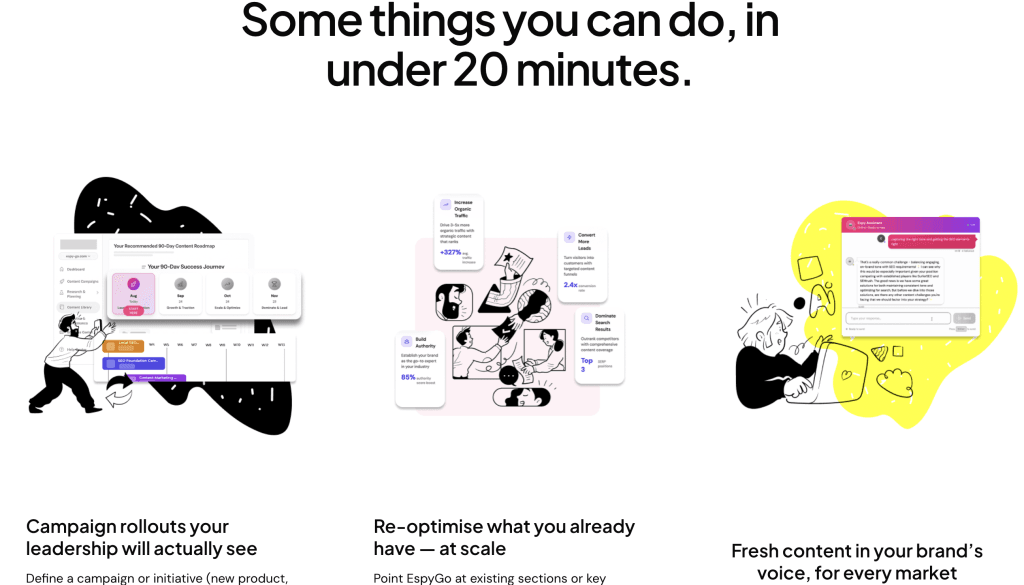
Most small businesses distribute content blindly — posting everywhere without knowing which channels actually strengthen their visibility inside AI search engines like ChatGPT, Claude, and Perplexity. EspyGo eliminates the guesswork by showing you exactly where your brand shows up in AI-generated answers and which content formats AI models actually pick up.
AI Visibility Signals: See which blog posts, LinkedIn updates, partner mentions, or podcasts are being surfaced inside AI responses — so you double down on the channels AI already trusts.
Channel Effectiveness Insights: Understand which distribution efforts strengthen your entity profile… and which ones AI completely ignores. No more wasting time on channels that don’t influence discovery.
Competitor Benchmarking: Spot where competitors gain AI visibility and which distribution strategies help them outperform you inside AI-generated recommendations.
Focused Distribution Strategy: Instead of “posting everywhere,” EspyGo reveals the 3–5 channels that consistently amplify your brand across AI systems — giving you enterprise-level clarity with small-business simplicity.
Conclusion: Transform Your Content’s Impact Starting Today
Modern content distribution strategies don’t require enterprise budgets—they require enterprise thinking. By shifting from random posting to systematic multiplication, you can achieve dramatically better results with the content you’re already creating.
The difference between content that gets buried and content that builds businesses lies in distribution strategy, not creation quality. Start by auditing your best-performing content and applying the content multiplication method to just one piece this week. You’ll quickly see how strategic distribution transforms your content’s reach and impact.
Success in content distribution comes from consistency, strategic thinking, and measurement. Focus on building systems that make distribution easier over time, not harder. Every piece of content you create is an investment—proper distribution ensures you get maximum return on that investment.
The businesses that thrive in today’s competitive landscape are those that master both content creation and strategic distribution. You now have the framework to join them. Start with one piece of content, apply these distribution strategies systematically, and watch your reach multiply without additional budget or resources.
Your content has the potential to reach enterprise-level audiences. The only question is whether you’ll implement the distribution strategies that make it happen.
💡 Turn your content distribution into an AI-aware growth engine.
👉 Book a demo today and see which channels actually matter.