

You’re drowning in analytics dashboards, spreadsheets, and ‘insights’ that don’t actually help you decide what content to create next. Most SaaS agencies waste hours weekly tracking vanity metrics across platforms while missing the signals that predict which content actually converts prospects into clients. You’ve got Ahrefs showing keyword rankings, Google Analytics displaying page views, LinkedIn analytics revealing engagement rates, and a dozen other tools generating reports that somehow never translate into clear direction for your team.
Meanwhile, your clients are asking harder questions: “Which pieces of content are actually bringing us leads?” and “Why isn’t our content marketing delivering the ROI we expected?” You’re caught between overwhelming data complexity and the very real need to prove content marketing value.
The solution isn’t more data—it’s tracking the right metrics simply.
Discover the 5-metric framework that reveals exactly which content drives results so you can double down on what works and stop wasting time on what doesn’t. We’ll break down the essential metrics, show you how to track them efficiently, and reveal how successful agencies use this data to scale content without scaling headaches. By the end, you’ll have a clear system to track content performance across multiple platforms without the analytics overwhelm that’s currently paralysing your team’s productivity.
Why Most Content Tracking Fails SaaS Agencies
The Analytics Trap: More Data, Less Direction
Your current approach to content tracking is probably killing your agency’s efficiency. Most SaaS agencies fall into what we call the “analytics trap”—believing that more comprehensive data automatically leads to better decision-making.
Complex tools like Ahrefs and SEMrush overwhelm small teams with hundreds of metrics that don’t correlate with actual business outcomes. You’re tracking keyword positions for 500 terms, monitoring backlink profiles, and analysing competitor content gaps—but none of this data tells you which blog post generated three new client inquiries last month.
The vanity metric problem is epidemic. Page views, social shares, and even organic traffic don’t predict client satisfaction or retention. Agencies frequently celebrate 50% traffic increases while losing clients because that traffic consisted of unqualified visitors who never converted into leads.
Multiple dashboards create information silos instead of unified insights. Your team logs into Google Analytics for traffic data, HubSpot for lead attribution, LinkedIn for social performance, and email marketing platforms for newsletter metrics. Each tool tells part of the story, but no one has the complete picture of what content actually works.
Consider this scenario: Your latest SaaS comparison guide ranks #3 for a competitive keyword and generated 2,000 page views. The analytics look impressive until you discover that zero visitors converted into demo requests. Meanwhile, a simple “how-to” blog post with 200 views generated five qualified leads. Traditional metrics would suggest the comparison guide was more successful—exactly the wrong conclusion.
The Hidden Cost of Over-Tracking
The time audit numbers are concerning. Small agency teams spend approximately 8-12 hours weekly on analytics reporting across multiple clients. That’s nearly two full working days consumed by data collection and dashboard reviews rather than content creation and optimisation.
This over-tracking creates decision paralysis from conflicting metrics. When your social media analytics show high engagement but your website analytics reveal poor conversion rates, which signal do you trust? Teams often default to analysing more data rather than taking action, leading to “analysis paralysis” that stalls content strategy improvements.
Client relationships suffer when insights don’t translate to results. You present monthly reports filled with charts and graphs, but clients care about one thing: Are we getting more qualified leads? When you can’t draw clear lines between content performance and business outcomes, client confidence erodes rapidly.
The complexity also creates team knowledge bottlenecks. Usually, one person becomes the “analytics expert” who understands how all the tools work together. When that person is unavailable, content decisions halt because no one else can interpret the data meaningfully.
Most critically, over-tracking prevents content scaling. Instead of identifying winning patterns and replicating them, teams get lost in micro-optimising individual pieces based on dozens of variables. You end up with 20 slightly different blog post formats instead of one proven template you can scale across clients.
The 5-Metric Framework That Actually Predicts Success
Forget tracking dozens of vanity metrics. These five content performance indicators actually predict which content will drive client results and agency growth.
Metric 1: Content-to-Conversion Velocity
Content-to-conversion velocity measures the time between content engagement and lead generation, revealing which content types accelerate your clients’ buyer journeys.
Track this by setting up simple conversion tracking in Google Analytics 4 and your CRM system. When someone converts from visitor to lead, look back at their content interaction history. Did they convert immediately after reading your pricing guide, or did it take three blog post visits over two weeks?
The key insight: Shorter velocity typically indicates higher-intent content. Product comparison guides, pricing pages, and implementation tutorials usually show faster conversion velocity than thought leadership articles or industry trend posts.
To implement this tracking, create a simple spreadsheet with columns for content title, initial engagement date, conversion date, and velocity in days. Review monthly to identify your fastest-converting content types. Compare velocity across different platforms and topics to understand where prospects move quickest through your funnel.
For example, you might discover that LinkedIn articles about specific SaaS implementation challenges generate leads within 24-48 hours, while blog posts about general industry trends take 2-3 weeks to convert. This insight guides your content mix—allocate more resources to the faster-converting topics.
Metric 2: Cross-Platform Engagement Quality
Traditional engagement metrics count likes and shares equally, but cross-platform engagement quality focuses on meaningful interactions that predict genuine interest and potential inquiries.
Weight different engagement types by their correlation with lead generation. Comments typically indicate higher interest than likes. Saves and shares suggest content valuable enough to reference later. Email replies to newsletter content show active engagement that often precedes sales conversations.
Create an engagement scoring system tailored to each platform. On LinkedIn, a comment from a decision-maker at a target company might score 10 points, while a like scores 1 point. Blog post comments with specific questions score higher than generic praise.
Track engagement patterns that predict inquiries. You’ll often find that prospects who comment on 2-3 pieces of content within a month are significantly more likely to request demos or consultations. This pattern recognition helps your sales team prioritise follow-up efforts.
Platform relevance matters significantly. LinkedIn engagement from SaaS founders carries more weight than Twitter engagement from general marketing audiences. Tailor your engagement quality scoring to reflect your ideal client profile and business objectives.
Metric 3: Content Amplification Reach
Content amplification reach measures how often your content gets shared by clients, prospects, and industry connections—indicating content that resonates strongly enough for others to stake their reputation on sharing it.
Track organic mentions and backlinks generated by your content using tools like Google Alerts and basic backlink checkers. Monitor when existing clients share your content in their networks, as this often leads to warm referrals and new business opportunities.
Social media analysis should focus on who’s sharing your content, not just how many times it’s shared. One share by a SaaS industry influencer can generate more qualified leads than 100 shares by random followers.
Set up mention tracking without expensive software. Create Google Alerts for your agency name, client company names, and key topic phrases you write about. Many content amplification opportunities appear as mentions rather than direct shares—prospects discussing your content ideas in forums or LinkedIn conversations.
Monitor content performance in search and social algorithms by tracking which pieces consistently appear in Google’s “People Also Ask” sections or LinkedIn’s suggested content feeds. Algorithm favour indicates content that genuinely helps audiences, which correlates with lead generation potential.
Document amplification sources to understand your content’s network effects. Content shared by existing clients often reaches similar companies in their networks—your ideal prospect pool.
Metric 4: Lead Quality Attribution
Lead quality attribution connects content consumption to actual sales outcomes, revealing which pieces attract prospects most likely to become clients.
Track lead quality by scoring prospects based on company size, budget authority, and specific pain points addressed in your content. A lead generated from your enterprise software comparison guide who works at a 200-person company carries more potential value than one from a general marketing tips post at a 5-person startup.
Connect content touchpoints to closed deals through your CRM system. When prospects become clients, review their content engagement history to identify which pieces influenced their decision. This reverse-engineering approach reveals content that doesn’t just generate leads—it generates paying customers.
Implement lead scoring based on content engagement depth. Prospects who read multiple blog posts, download resources, and engage with email sequences demonstrate higher purchase intent than those with single-touchpoint interactions.
Monitor content performance across different buyer journey stages. Top-of-funnel content might generate many leads but few conversions, while bottom-of-funnel pieces attract fewer but higher-quality prospects. Balance your content portfolio accordingly.
Metric 5: Client Retention Correlation
Client retention correlation examines whether ongoing content consumption by existing clients predicts renewal likelihood and expansion opportunities.
Track how existing clients engage with your content after becoming customers. Clients who continue reading your blog posts, sharing your content, and engaging with newsletters typically show higher satisfaction and retention rates.
Identify content topics that correlate with client success. If clients who engage with your implementation guides and best practices content achieve better results with your services, create more of this material to improve overall client outcomes.
Use content engagement as an early warning system. Clients who stop engaging with your content often show declining satisfaction before it appears in direct feedback. Proactive outreach based on engagement drops can prevent churn.
Monitor which content formats existing clients prefer. Video tutorials might drive higher engagement than written guides, indicating opportunities to improve service delivery through preferred content formats.
Building Your Simple Cross-Platform Tracking System
Setting Up Your Content Performance Dashboard
Create a unified tracking system that takes under 30 minutes weekly to maintain. Start with a simple spreadsheet containing these essential columns: Content Title, Platform, Publish Date, Conversion Velocity, Engagement Quality Score, Amplification Reach, Lead Quality Score, and Client Retention Impact.
Connect key platforms with basic integrations rather than complex automation. Google Analytics 4 can track most website content performance. LinkedIn’s native analytics cover social content. Your CRM system should capture lead source attribution. These three tools provide 90% of the insights you need.
Establish a consistent weekly reporting rhythm. Every Monday morning, spend 15 minutes updating your dashboard with the previous week’s performance data. This regularity prevents data backlogs and ensures insights remain actionable rather than historical curiosities.
Use UTM parameters consistently across all content links to track cross-platform performance accurately. Create a simple UTM naming convention: utm_source (platform), utm_medium (content type), utm_campaign (topic or client name). This basic tracking reveals which platforms drive the most qualified traffic.
Build client reporting templates that focus on business impact rather than vanity metrics. Show content-to-lead attribution, velocity improvements, and amplification reach instead of page views and social shares. Clients care about results, not activity.
Automation Tools That Actually Help
Focus on automation that saves time without sacrificing insight quality. Tools like Zapier can automatically update your tracking spreadsheet when new leads are generated, connecting lead source data to content performance without manual data entry.
Google Data Studio provides free dashboard creation that pulls data from multiple sources into unified reports. Create client-specific dashboards showing their content performance metrics without requiring separate tool access.
Buffer and Hootsuite offer scheduling and basic analytics that eliminate manual posting while providing engagement data. However, don’t rely solely on their analytics—supplement with your own tracking system for complete insight.
Email marketing platforms like ConvertKit and Mailchimp provide detailed engagement tracking that reveals which newsletter content drives the highest click-through rates and conversions. Integrate this data into your overall content performance framework.
CRM systems like HubSpot and Pipedrive can automatically track content touchpoints in lead records, showing which pieces influenced deal progression. This automation eliminates manual lead attribution while providing valuable insights.
Weekly Optimisation Rituals
Implement a 15-minute weekly review process to identify winning content and scaling opportunities. Every Monday, review your content performance dashboard for three key insights: which pieces drove the fastest conversions, what engagement patterns predict leads, and where amplification created new opportunities.
Use this decision framework for scaling successful content: If a piece shows top-quartile performance in three of the five core metrics, create similar content immediately. If it performs well across all metrics, build it into your standard content template.
Create client reporting templates that tell success stories. Instead of presenting data tables, show how specific content pieces contributed to lead generation, shortened sales cycles, or increased client visibility. Frame performance data in business impact terms that justify continued investment.
Establish content replication protocols based on performance insights. When blog posts about specific SaaS implementation challenges consistently drive leads, create similar content for other relevant software categories. Pattern recognition accelerates content scaling without reinventing successful approaches.
Scaling Your Best-Performing Content
Pattern Recognition That Drives Growth
Successful SaaS agencies identify content formats that consistently perform across clients rather than treating each content piece as unique. Look for patterns in your highest-converting content: Are how-to guides consistently outperforming thought leadership pieces? Do client case studies generate more leads than industry trend analyses?
Recognise topic themes that generate qualified leads repeatedly. Content addressing specific implementation challenges, integration problems, or ROI measurement often resonates because it addresses immediate pain points prospects face when evaluating SaaS solutions.
Spot optimal posting times and distribution strategies through performance data analysis. You might discover that LinkedIn posts perform better on Tuesday mornings, while blog content gets more engagement when published on Thursdays. These timing insights compound over months of consistent application.
Real-world example: A London-based SaaS content agency identified that “versus” comparison posts consistently generated 3x more demo requests than feature-focused content. They scaled this insight across clients, creating comparison content for every major competitor in each client’s space, resulting in 40% increased lead generation within six months.
Track platform-specific performance patterns. Content that performs well on LinkedIn might need different formatting for blog distribution. Understanding these nuances allows you to adapt successful content across platforms rather than creating entirely new pieces.
The 80/20 Content Strategy
Focus 80% of your content resources on proven high-performers and reserve 20% for testing new approaches. This resource allocation framework prevents teams from constantly chasing new content ideas while neglecting formats that reliably drive results.
Systematic content replication involves creating templates from your best-performing pieces. If your top-converting blog post follows a specific structure—problem identification, solution explanation, implementation steps, results—use this template for new topics rather than starting from scratch each time.
Resource allocation framework for content scaling:
- 50% of time: Create new content using proven templates
- 30% of time: Optimise and update existing high-performers
- 20% of time: Test new formats and topics
Content adaptation across clients requires understanding core success elements versus client-specific details. The structure and approach of successful content can be replicated while customising examples, case studies, and specific pain points for different client audiences.
Track replication success rates to refine your scaling approach. Not every high-performing piece will succeed when adapted for different clients or topics. Monitor which elements transfer successfully and which require modification for optimal performance.
Scaling Successful Content Formats
Template-based content creation accelerates production while maintaining quality. When you identify a blog post structure that consistently converts prospects, create a template outlining the introduction approach, section organisation, call-to-action placement, and content length.
Systematic topic expansion involves taking successful content themes and creating comprehensive content clusters. If your “SaaS implementation guide” performs exceptionally well, develop related pieces covering pre-implementation planning, common pitfalls, team training, and success measurement.
Cross-client content adaptation requires understanding universal pain points versus industry-specific challenges. A successful content piece about software migration might work for multiple SaaS categories with adjusted examples and case studies.
Quality control becomes crucial when scaling content production. Establish review checklists ensuring scaled content maintains the original’s effectiveness while addressing each client’s unique audience and objectives.
Monitor scaled content performance against original benchmarks. If replicated content underperforms significantly, analyse whether the topic, timing, or adaptation approach needs adjustment before continuing the scaling process.
Advanced Tracking Techniques for Agencies
Multi-Touch Attribution Modelling
Multi-touch attribution reveals the complete content journey prospects take before converting, rather than crediting only the last touchpoint before lead generation. This understanding helps optimise content sequences and identify supporting content that enables conversions.
Implement first-touch and last-touch attribution tracking to understand both content that attracts prospects and pieces that close deals. Google Analytics 4 provides basic attribution modeling, while CRM systems can track the complete content engagement sequence.
Weight different touchpoints based on their position in the buyer journey. Early-stage educational content might receive attribution credit for lead generation, while late-stage comparison content gets credit for deal closing.
Track assist conversions to identify supporting content that doesn’t directly generate leads but enables conversions. Blog posts that educate prospects about implementation challenges might not convert directly but prepare them for more targeted content that does.
Create content journey maps showing typical paths prospects take from awareness to conversion. These maps reveal content gaps and opportunities for strategic content placement that guides prospects toward qualified lead status.
Cohort Analysis for Content Performance
Cohort analysis groups content performance by time periods, revealing seasonal trends and long-term effectiveness patterns. Track how content published in different months performs over time to identify optimal publishing schedules and content lifecycle patterns.
Compare content performance cohorts based on topics, formats, or platforms. Content published during industry conference seasons might show different engagement patterns than pieces published during slower periods.
Analyse lead quality cohorts to understand which content attracts prospects who become long-term, high-value clients. This analysis guides content investment toward formats that attract ideal customer profiles.
Retention cohort analysis for existing clients shows whether content engagement correlates with service satisfaction and renewal likelihood. Clients who engage with your content consistently might demonstrate higher lifetime value.
Track content performance degradation over time to understand when pieces need updating or refreshing. Evergreen content might maintain performance for years, while trend-based pieces require regular updates.
The EspyGo Advantage: Finally See Which Content Actually Drives Results
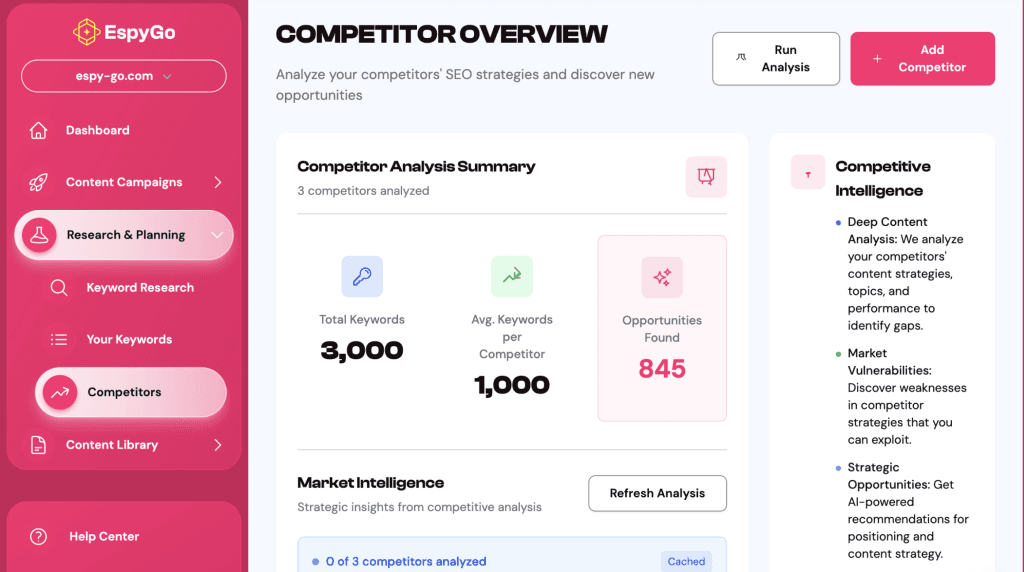
Most agencies track everything except the one thing that truly matters: which content AI models associate with your brand—and whether that visibility leads to qualified pipeline. EspyGo fixes that by giving you a clear, unified view of how your content performs across AI search engines like ChatGPT, Claude, and Perplexity.
AI Content Visibility Signals: See which blog posts, LinkedIn thought leadership pieces, and client case studies AI consistently surfaces when users ask questions relevant to your niche—so you know exactly what to double down on.
Conversion-Influence Tracking: EspyGo shows how your content contributes to buyer intent across AI platforms, helping you understand which pieces shorten sales cycles and which ones never get picked up.
Competitor Insight Monitoring: Instantly see where competitors gain visibility in AI answers and what content types are helping them outrank you in AI-driven discovery.
Data Simplified, Not Complicated: Instead of drowning in dashboards, EspyGo highlights the 3–5 content formats that most strengthen your entity profile and drive measurable pipeline impact.
Conclusion
Simple, focused content tracking beats complex analytics every time. The five-metric framework—content-to-conversion velocity, cross-platform engagement quality, content amplification reach, lead quality attribution, and client retention correlation—provides the insights SaaS agencies actually need to scale successful content strategies.
Stop drowning in data that doesn’t drive decisions. Track what matters, ignore what doesn’t, and systematically scale what works. Your clients will see better results, your team will work more efficiently, and your agency will grow more predictably.
Implementation starts with small steps. Choose one metric from the framework and begin tracking it this week. Set up your simple tracking dashboard, identify your current high-performers, and start scaling proven content patterns. Build momentum through consistent measurement rather than attempting to track everything simultaneously.
The agencies that thrive in the competitive SaaS market are those that can demonstrate clear ROI through strategic content performance tracking. While competitors drown in analytics paralysis, you’ll have the clarity and focus to scale content that actually converts prospects into profitable client relationships.
Your content deserves better than vanity metrics and dashboard overwhelm. Embrace simple tracking that actually predicts content success and scales your agency’s growth. The choice is clear: continue struggling with complex analytics that overwhelm your team, or embrace focused measurement that drives real business results.
Start building your content performance tracking system today. Your future self—and your clients—will thank you for choosing clarity over complexity.
💡 Want clarity on which content is actually working inside AI ecosystems—so you can scale the right pieces, not just more pieces?
👉 Book a demo today.